Self-test: Is a "Foot Reflexology (Cert.)" course the right one for me?

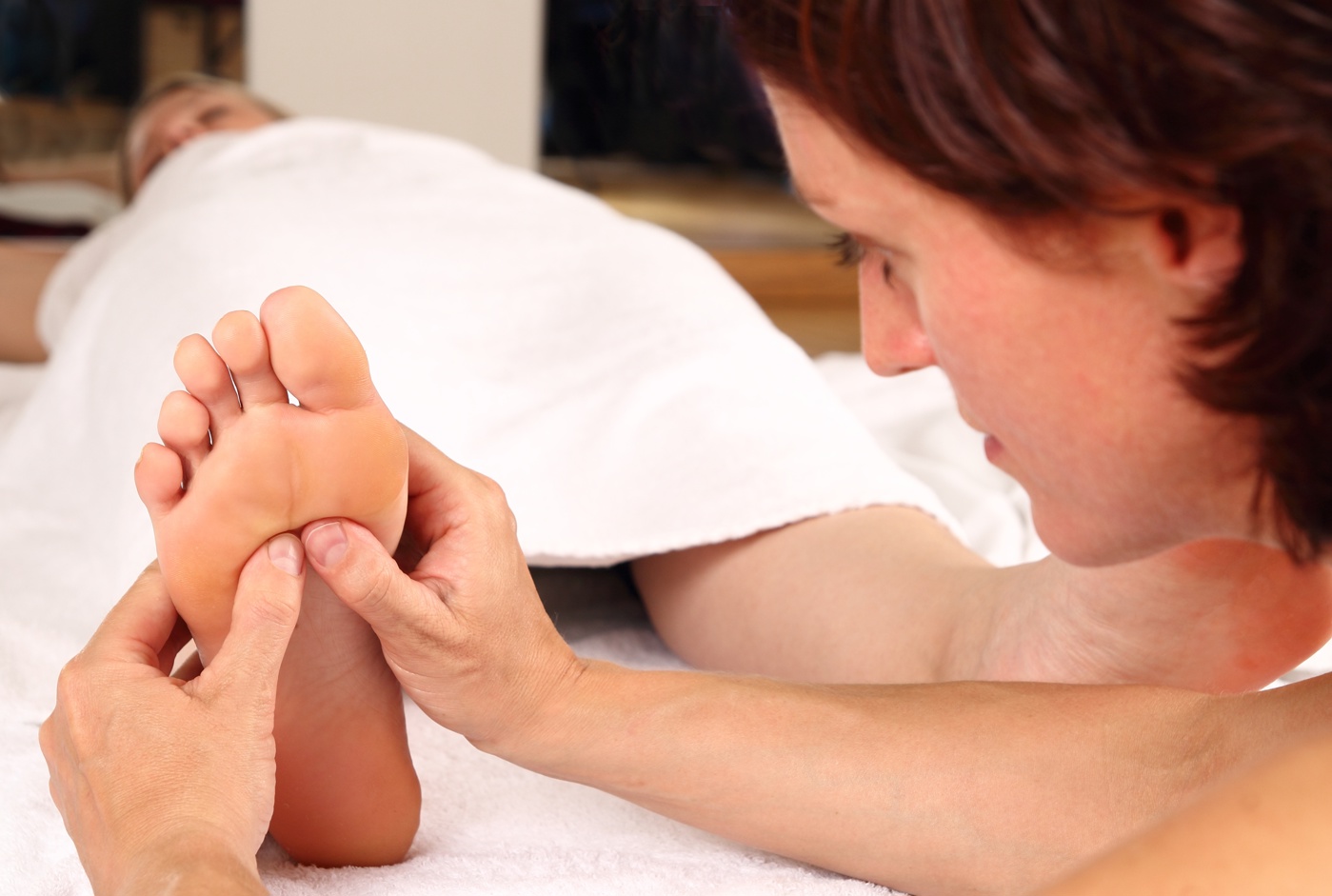
A specialist massages a client's foot reflex zones to release blockages with selective stimulation.

Take our self-test to find out whether a job in foot reflexology meets your expectations and whether you are on the right track with the appropriate specialist training leading to a "school certificate".

Start

What does everyday working life in foot reflexology look like?

During the introductory consultation and an initial massage, the certified foot reflexology therapist will gain an overview of the client's situation and wishes. Any minor complaints are also recorded. He/she checks for possible contraindications or risks and then determines together with the client which treatment goals are to be pursued.

During the actual treatments, the foot reflexology therapist (certified) works on the key points and reflex zones on the foot using special grip and pressure techniques to stimulate or calm the body's organs as desired. The aim is always to stimulate the self-healing powers of the body and the soul. During the massage, the therapist observes any reactions that occur and adapts the treatment accordingly.

The number, duration and intervals between treatments can be adjusted according to the course of therapy. A series of treatments is concluded with a final consultation and the therapist completes the treatment documentation and issues an invoice.
Question 1:

Do the activities described meet your expectations? Would you like to work as a specialist in foot reflexology?

Target group and skills: Who is the foot reflexology training course suitable for? What qualities and skills are required?

The foot reflexology training course with the school's own certificate is aimed at the following target group:

  • People who are looking for a first insight into this area and want to treat people without major foot complaints
  • People with training in the healthcare sector who would like to acquire additional skills for massaging feet that are basically free of pain
  • People who would like to set up their own practice in this field (please note: the requirements for self-employment may vary from canton to canton!)

In order to work successfully as a foot reflexology therapist (certified), the following skills and personal characteristics are desirable:

  • Sense of hygiene, cleanliness and order
  • Craftsmanship
  • Enjoy dealing with people
  • Empathy
  • Sensitivity and precision
  • Good manners
  • Service orientation
  • Sufficient start-up capital to start your own business

Question 2:

Do you belong to one of the target groups for this continuing education, further training and do you have the necessary personal qualities?

Prerequisites for admission to foot reflexology training:

Access to the courses for specialist training in foot reflexology with completion of the "school's own certificate" is usually free, i.e. no specific previous training or professional experience is required.

Admission to the Swiss Association for Reflexology (SVRT) requires a completed vocational education and training (VET) as well as a well-founded completed training in reflexology (for example with the OdA KT Method Reflexology branch certificate). Details can be foundhere.

Question 3:

Do you meet the requirements for admission?

Subject matter and content of continuing education, further training

Schools that offer foot reflexology training leading to a "school certificate" compile their own course content. The course content can therefore vary from school to school.

The following topics are often addressed:

  • Basic anatomy of the body
  • Anatomy of the foot
  • Vegetative nervous system
  • History of foot reflexology
  • Reflex zones of the foot
  • Effects (indicators and counter-indicators)
  • Different grip techniques
  • Procedure of the foot reflexology massage (anamnesis, visual and tactile findings, etc.)

Tip: In the yes-answer you will receive suitable help on the question: How do I find the right school and course?

Question 4:

Are you interested in this content, would you like to acquire knowledge in these subject areas?

Costs and financing of continuing education, further training

The costs for foot reflexology training are determined independently by the schools. They therefore vary from school to school.

You can expect the following costs for a part-time specialist training course of around 1-14 days:

  • Course feesBetween CHF 312.- and CHF 1'380.-, which usually also includes theExamination feeincluded.

(Basic courses, which also include the "medical basics" for ASCA and/or EMR registration, usually take longer and are correspondingly more expensive: between CHF 3,300 and CHF 7,100).

  • Some providers requireExtra costsfor
    • Teaching aids
    • Training documents

Please contact the provider of your choice directly for information on possible extra costs.

Question 5:

Are you able to pay for the course?

Course structure, duration of study, training options, teaching format and learning effort

  • The foot reflexology training is usuallypart-timedesigned andmodularbuilt up.
  • The duration of the specialist courses in foot reflexology depends on the provider and the course offered (introduction, basics, in-depth): As a rule, the courses last approx. 1-14 days. ATTENTION: For theHealth insurance recognitionor registration with theASCA(Swiss Foundation for Complementary Medicine) as a therapist of this method, your training must include at least 100 contact hours in foot reflexology and at least 150 hours of basic medical knowledge to be registered with theEMR(Erfahrungsmedizinisches Register), you must also provide evidence of 250 treatments you have carried out yourself.
  • TheTimetablesvary from school to school. Lessons often take place on one or two working days or two evenings a week or on selected Saturdays.
  • The foot reflexology continuing education, further training takes place in theClassroom teachingtake place. Some theory lessons are also offered as online lessons or hybrid lessons.
  • Thanks to the extra-occupational concept of continuing education, further training, you can apply and deepen your knowledge immediately in practice. Nevertheless, you should be prepared for thePreparation and follow-upThe amount of time you should allow for the lessons and self-learning time depends on your previous knowledge, working style and learning speed. We recommend allowing at least 4-6 hours per week.

Question 6:

Can you find the time for lessons and self-study?

Degree, diploma and title

As already mentioned, most foot reflexology training courses are modular. Those who have successfully completed each module can sit the final examination for the school's own certificate.

As a rule, the final examination consists of a theoretical and a practical part.

With some providers, however, a course attendance of at least 80% is sufficient to obtain the school's own certificate.

Diploma and title

Successful graduates receive a certificate / diploma from the respective school: "Foot reflexology therapist [name of school] (cert.)" or "certified foot reflexology therapist [name of school]".

Question 7:

Do you have the confidence to pass the foot reflexology course?

Have you already made up your mind?
Or would you like to know more?

Show schools of course «Foot reflexology (certified)» and get information