Self-test: Is a "Complementary therapist (certified)" course right for me?

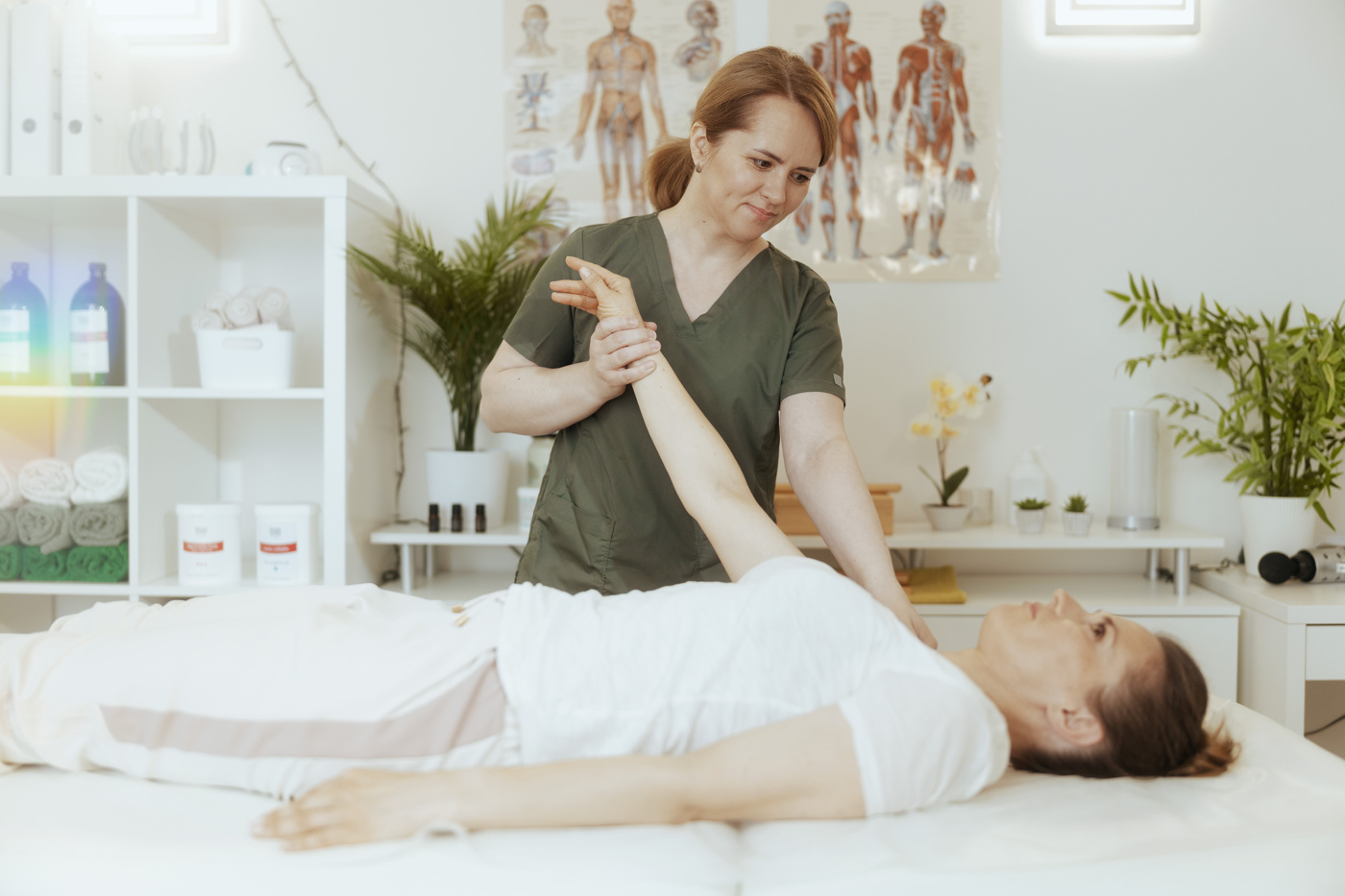
A complementary therapist uses movement work to stimulate the patient's self-regulatory powers.

Does working as a complementary therapist (certified) meet your expectations and needs? Take the free self-test and find out whether you are on the right path with an extra-occupational course with a certificate in this field.

Start

Complementary therapist: What does everyday working life look like?

There are many, veryVarious complementary therapy methods. This includes all forms of treatment that are offered in addition to (and sometimes in contrast to) conventional medicine. The methods can be as varied as theActivitieslook like. Perhaps you would like to offer your mediumistic skills as a radiesthesist (commuter) or spiritual healer in your free time and free of charge, perhaps you would like to become self-employed with your own kinesiology practice or work as a yoga therapist in a rehabilitation clinic. Many things are possible here - not everything with all methods.

Depending on the method, specific means are usedFor example, with the hands using touch or massages, sensory with sounds or olfactory impulses, with heat or cold (e.g. in the form of wraps), mentally medially, with the help of movement sequences, etc. Complementary therapists work with individuals and groups. Some methods have standardized treatment sequences that extend over 6 to 10 sessions, while other methods regard each session as a self-contained unit.

Treatment procedure:

At the beginning, the therapist clarifies the current topic, wishes and needs with the client. The treatment is then discussed. Depending on the method, this can take place standing, sitting or lying down. In most cases, the whole body is treated, which usually remains clothed. The therapy can be accompanied verbally or take place in silence. In some methods, the therapist instructs the client to perform certain movements, to be aware of the body and to pay attention to changes. In other methods, the therapist uses gentle pressure and massage techniques to balance the energy flows of the meridians, release blockages and tension points or realign the skeleton with micro-movements and loosen stuck fascia strands. The aim of each method is to stimulate self-healing processes on a physical, mental and spiritual level and to help harmonize the body's energies.

Many people who work in complementary therapy have aown practiceor work in aJoint practiceThey also take care of administration, correspondence, appointments, advertising, bookkeeping, etc. Doctors or other healthcare professionals often expand their specialist knowledge with complementary therapy methods and incorporate them into their conventional medical practice.
Question 1:

Do the activities described meet your expectations? Would you like to work as a complementary therapist?

Who is a complementary therapist training course suitable for? What qualities and skills are required?

The training objectives in complementary therapy and the target groups are different:

Introductory and taster coursesare aimed at

  • anyone interested in gaining an insight into a complementary therapy method
  • Healthcare and naturopathy professionals who want to expand their skills and learn new methods

Method-specific specialist trainingare aimed at

  • People who want to work practically with it and are willing to acquire basic medical knowledge and other necessary skills, depending on the desired degree
  • Healthcare and naturopathy professionals who want to expand their skills
  • Persons seeking a federal qualification in complementary therapy

Method-specific continuing education, further trainingare aimed at

  • Healthcare and complementary therapy professionals who wish to expand their skills and maintain their qualifications or recognition with associations and other organizations

For successful complementary therapy work you need:

  • Interest in medical and psychological issues
  • Physical and mental resilience
  • Willingness and ability to familiarize yourself with the theory and methods of a healthcare system
  • analytical thinking, good communication skills and dexterous hands
  • if you have your own practice: economic skills to run your own business

Question 2:

Do you belong to one of the target groups and do you have the necessary personal qualities?

Requirements for admission to training courses in complementary therapy:

Complementary therapy training courses are generally open to all interested persons (apart from specific further training courses for specialists). No special prior training or specific professional experience is required.

Degrees in the field of complementary therapy require different levels of medical knowledge, depending on the method. This knowledge can usually be acquired as part of the training. Corresponding prior knowledge is taken into account.

Some schools set their own conditions for admission, for example:

  • Age of majority or minimum age of 20 years
  • Apprenticeship qualification with Federal Diploma of Vocational Education and Training (Federal VET Diploma) or Matura or several years of professional experience
  • good knowledge of German

Question 3:

Do you meet the requirements for admission?

Subject matter and content

The subject matter of training courses in the field of complementary therapy is based on the respective method and depends on the type of course and the training objectives. The schools are free to design their courses and the certificates they award. Training courses that prepare students for the "OdA KT sector certificate", which can be used to obtain a federal diploma, must comply with the requirements of the relevant professional organization (OdA). Here is an overview:

Basic topics for all methods and introductory course forms:

  • Basics of the chosen method or discipline (origin, development, topicality, etc.)
  • Anatomy, physiology and diseases
  • Principles, concepts, techniques and effects of treatment
  • Structure and course of treatment
  • Indicators, contraindicators and limits of treatment

Contents of OdA KT-recognized training courses (complementary therapy)*:

  • Method training: basics of the chosen method, method-related medical knowledge, method-specific personal process (experience gained by applying the method to oneself)
  • "Tronc Commun": profession-specific basics (e.g. understanding of health, ethics, practice management), social science basics, medical basics
  • Internship

* possible with the methods: Acupressure therapy, Alexander technique, APM (acupuncture massage therapy), aquatic bodywork, breathing therapy, Ayurveda therapy, movement and body therapy, biodynamics, craniosacral therapy, eutony, fascia therapy, Feldenkrais therapy, eurythmy therapy, kinesiology, polarity, rebalancing, reflexology, rhythmic massage therapy, shiatsu, structural integration, Trager therapy and yoga therapy.

Question 4:

Are you interested in this content and would you like to acquire knowledge in these subject areas?

Costs of continuing education, further training

The costs for taster and short introductory courses start at a few hundred francs,

Training courses that conclude with a school certificate or the diploma/certificate of the method association and lead to the acquisition of the OdA KT industry certificate can cost CHF 20,000-30,000.

Some providers charge extra for teaching materials and examinations, and there may also be external examination fees and costs for travel and accommodation for bock events etc.

By the way:

Training courses in complementary therapy are only part of the official Swiss higher professional education at the highest level. In concrete terms, this means that only those who pass the Advanced Federal Professional Examination (AFPE) for the federal diploma as a complementary therapist at the end of the training and after working under supervision will receive a federal contribution (max. CHF 10,500) towards the training costs.

Question 5:

Are you able to pay for the type of course you want?

Duration and scope

Training courses in the field of complementary therapy vary in length. As a rule, they are designed to be part-time and take place in classroom teaching. At some schools, certain (theory) lessons can also be completed online. Many training courses consist of modules that can be attended and completed in parallel or consecutively. This makes it easier to adapt the intensity to your own life situation*.

Duration and scope according to training type:

  • Taster and introductory coursesusually last a few days and often take place at weekends or as a block event.
  • WithTraining in a specific methodThe duration and scope depend on the method. As a rule, the method associations specify how many teaching units are required to teach the subject matter so that the method can be practised with recognition.
    Lessons take place on certain evenings or weekdays and are spread over several days, weeks or months. Sometimes there are also intensive courses, which are correspondingly shorter.
  • Training courses leading to the OdA KT industry certificateare modular in structure and can be completed in three years. They comprise at least 1,190 teaching/contact hours, of which:
    • at least 500 hours of method training
    • at least 340 hours Tronc Commun
    • at least 250 hours internship

How muchSelf-learning timedepends on your prior knowledge, working style and learning speed. To be on the safe side, allow at least another half of the lesson time for this.

The advantage of longer training periods is that they offer more opportunity to consolidate what you have learned and to try out and practise on yourself, friends, acquaintances and family.

*It should be noted that modular qualifications are often only valid for five years.

Question 6:

Can you find the time for the training you want?

Degree, diploma and title

The type of degree and certification of complementary therapy training courses depends on the type of training and the school:

WithTaster and introductory coursesThere is usually no final examination; graduates usually receive a certificate of attendance.

WithTraining in a specific methodthere is a final examination. This is usually divided into a theoretical and a practical part (depending on the method). In the practical part, a treatment in the relevant method must be carried out on a client under the supervision of experts.

If you pass the final examination, you will receive a diploma from the school and a title such as "[method] therapist [name of school]" or "qualified complementary therapist [method] [name of school]". This gives you further options:

  • If the school and its training are recognized by the relevant method association, you often automatically receive the association certificate or the right to apply for it.
  • If the training meets the requirements forIndustry certificate OdA KTyou can obtain their industry certificate from the OdA KT with the school certificate. This gives you access to the federal Advanced Federal Professional Examination (AFPE) "Complementary therapist with federal diploma [method]".

Question 7:

Are you confident that you can manage your preferred complementary therapy training?

Have you already made up your mind?
Or would you like to know more?

Show schools of course «Complementary therapist (certified)» and get information